About Electrogrip Carbogem Ground Enhancing Compound
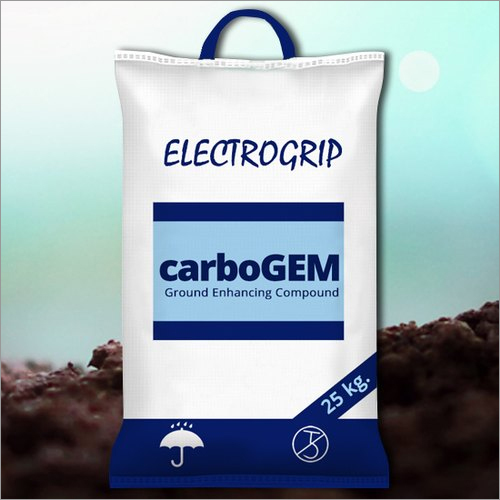
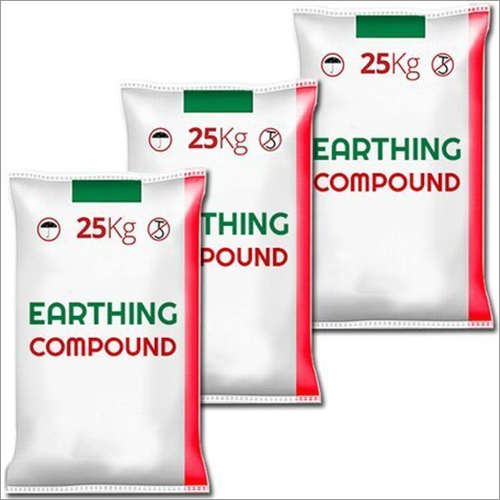
Our company offers premium grade ElectrogripCarbogem Ground Enhancing Compound which is especially formulated for the enhancement of the current grounding system. It is added with various ingredients with excellent moisture resistance which results in increased life of the components within the ground. It also helps to maintain the conductivity to prevent damages in case of current leakages. The offered ElectrogripCarbogem Ground Enhancing Compound is available in non-toxic and non-sticky plastic bag with storage capacity of 25 Kilograms.
Specification
| Brand | Electrogrip |
| Packaging Size | 25 Kg |
| Physical State | Powder |
| Packaging Type | Woven Sack |
| Color | White |
| Country of Origin | Made in India |
Electrogrip Carbogem is engineered to significantly improve the performance of earthing, grounding, and lightning protection systems. Its ultra-low resistivity ensures robust and consistent grounding in all soil types, enhancing safety and equipment longevity even in challenging environments.
Durable, Eco-Friendly, and Maintenance-FreeManufactured using a carbon-based, non-toxic, and neutral pH formulation, Carbogem is safe for the environment and installation personnel. Its unique composition prevents corrosion, has no reaction with cement or concrete, and requires no periodic maintenance, making it a cost-effective and sustainable solution.
Simple Application and Long-Lasting ProtectionSupplied as a powder or granular material, Carbogem is straightforward to use: just mix with water and pour around the earthing electrode. Its composition retains moisture and resists high humidity and temperatures up to 60C, guaranteeing effective protection and enhanced system efficiency over time.
FAQ's of Electrogrip Carbogem Ground Enhancing Compound:
Q: How do I apply Electrogrip Carbogem Ground Enhancing Compound in an earthing system?
A: To use Electrogrip Carbogem, mix the powder or granules with water as per guideline and pour the mixture evenly around the earthing electrode in your grounding pit. This direct soil application method ensures effective conductivity and moisture retention for enhanced system performance.
Q: What makes Carbogem suitable for all soil types?
A: Carbogem has a neutral pH value of 7, is non-reactive, and is formulated to be compatible with varied soil compositions. Its carbon-based structure and non-corrosive nature allow it to function reliably across a wide range of soil conditions without causing damage or losing efficiency.
Q: When should I use Electrogrip Carbogem for grounding purposes?
A: Use Carbogem during the initial installation of a grounding system or when upgrading earthing infrastructure for enhanced conductivity, corrosion resistance, and long-term protection-especially in locations where soil resistivity is high or climatic conditions are challenging.
Q: Where can Electrogrip Carbogem be applied effectively?
A: Carbogem is ideal for all environments-residential, commercial, and industrial-requiring robust grounding and lightning protection. It is particularly beneficial in areas with sub-optimal soil or where consistent grounding resistance is critical for equipment safety.
Q: What is the storage and shelf life advantage of Carbogem?
A: Electrogrip Carbogem offers unlimited storage life when kept dry, thanks to its non-water-soluble composition and packaging in moisture-proof HDPE bags. This makes inventory management simple with no risk of product degradation over time.
Q: What are the key benefits of using Electrogrip Carbogem?
A: Key benefits include ultra-low resistivity for superior conductivity, non-corrosive and maintenance-free operation, environmental safety, no chloride or sulphur content, flame retardancy, and high efficiency even under extreme moisture or temperature variations.
Q: Is Carbogem safe for the environment and nearby concrete structures?
A: Yes, Carbogem is non-toxic, eco-friendly, and non-reactive with cement or concrete. Its formulation ensures there is no negative impact on the environment or structural materials surrounding the grounding system.
 Call Us : 08045477535







 Send Inquiry

 Send Inquiry
 Send Inquiry
 Send SMS
 Call Me Free